Situation
Transit advertising has been the hardest format to measure: the audience changes with every stop. A bus that carries an advertisement is sold by the number of vehicles and the length of the campaign, while the advertiser wants to know how many people it actually reached. In Banja Luka, a brand campaign on a city bus line was measured for its whole run and reported route by route.
Setup
RVC.DIGITAL's transportation module does the measuring on the vehicle. The vehicle's existing IP camera measures how many people the vehicle passed and reached and their aggregated age and gender split — percentages only, nothing recorded — and a GPS unit maps where. No additional camera had to be installed.
What was measured
- Route KPIs — pass-bys, unique reach, frequency and impressions, per route and for the whole campaign
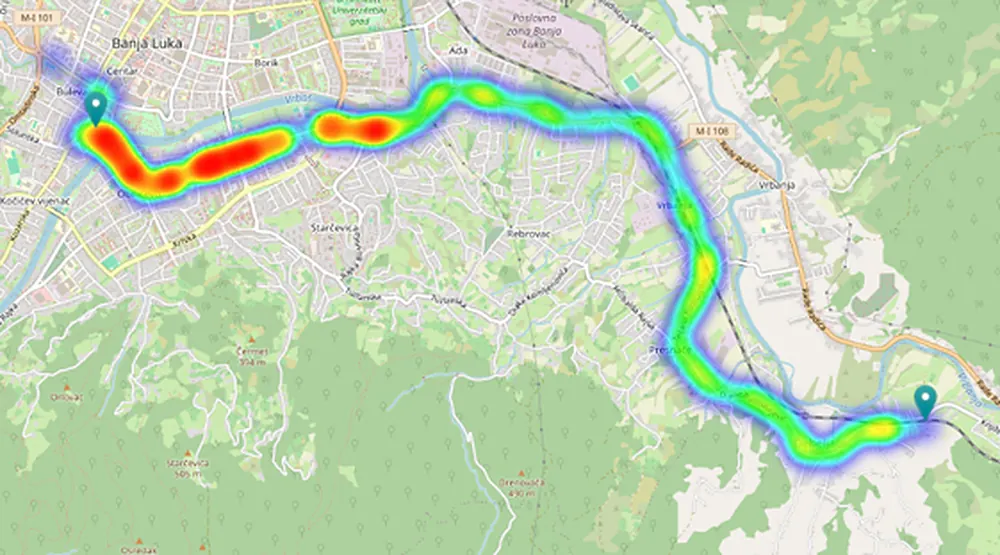
- GPS heatmap — where along the route the audience was densest, by day and time
- Age and gender split — aggregated, from the vehicle's own camera
What the advertiser received
At the end of the campaign the advertiser received a report as a PDF: the period, the routes, reach and frequency per route, and the audience mix. A bus campaign reported like a digital one — by route, not by the number of vehicles.
Privacy
Percentages only, nothing recorded: the vehicle's camera adds an aggregated age and gender split, and no image leaves the device. Privacy & compliance →