Situation
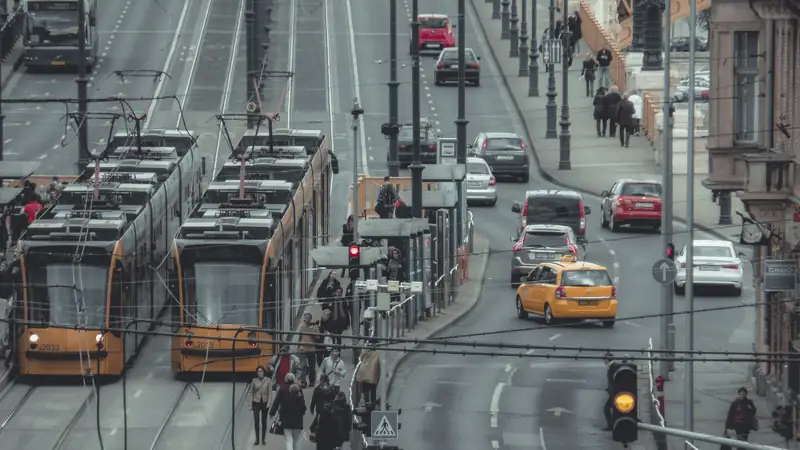
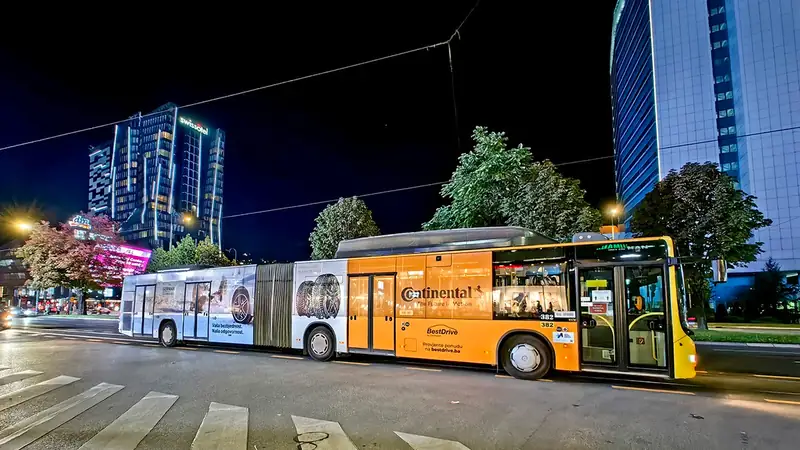
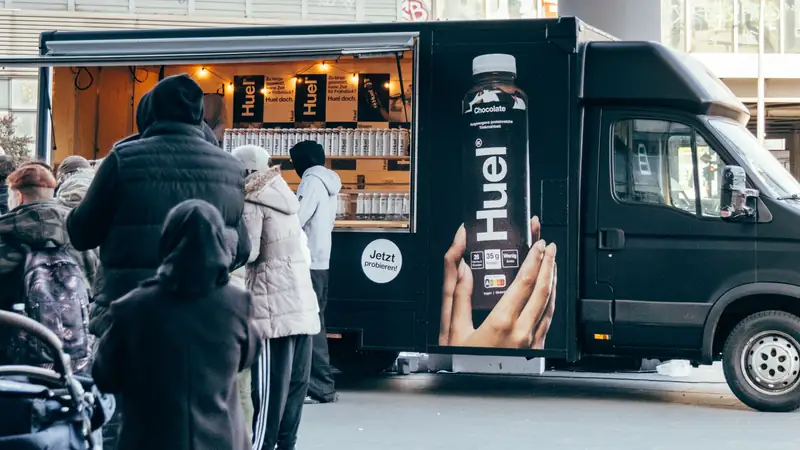
ECHO POSTER took the Huel roadshow to five German cities with a full street-level toolkit: a food truck handing out samples, LED trucks, tram advertising, posters and stickers, night-time projections and reverse graffiti. A street activation is easy to see and hard to count. The question was who actually stopped, looked and engaged — and at what time of day.
Setup
RVC.DIGITAL measured three days of the roadshow with a camera device mounted on the campaign vehicle at the sampling point. The device analyses what it sees on the spot and sends only numbers; near-real-time figures were available to the team during the activation.
What was measured
- Passers-by — people who walked past the activation
- Impressions — people who turned towards it
- Attention — people who looked longer than a set threshold
- Dwell and watch time — time near the activation, and time spent looking at it
- Age group and gender — aggregated
What the measurement showed
- Footfall peaked in the early afternoon, with the lunch break, and surged before and after working hours.
- Impressions stayed steady from morning to evening.
- Attention rose in the mid-afternoon, when people had more time to stop, ask questions or try the prize wheel.
- The age distribution of the people who engaged, and the hours when each group was most responsive, became visible.
What it changed
With figures arriving during the activation, the team could act on them: move the food truck to where natural footfall was better, send street-team members to the zones with more attention, and test creative variants in different parts of the city.
Privacy
People are counted, never identified. Video is not recorded or stored, faces are not recognised, and only aggregated, anonymous figures leave the device. Privacy & compliance →