Situation
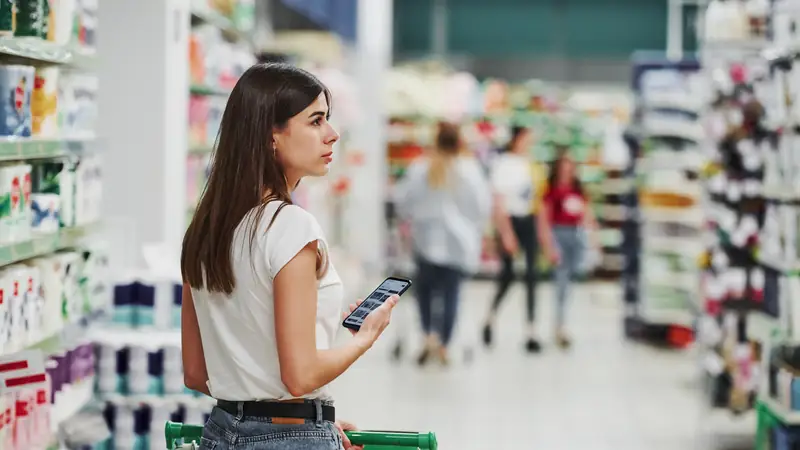
A retail media network sells screen time inside the store. For a long time it was sold the way posters were: by the number of screens and the footfall of the store. Advertisers now ask a harder question: who actually stood in front of the screen, and did they look? The hypermarket chains in this story answer it with measured numbers for every screen — without recording a single shopper.
Setup
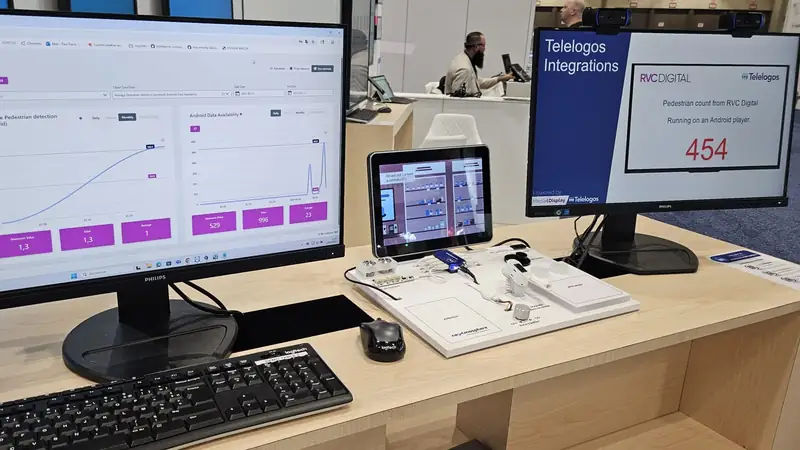
Each measured screen has a small RVC.DIGITAL device and a camera next to it. Where the screen is a digital totem, the measurement comes built into the display: the totem arrives with the camera and the device already on board. The devices are pre-installed and need only a power socket. Each one runs on its own 4G connection and never touches the store network, so there was nothing for the retailers' IT teams to open or approve. All analysis happens on the device; what leaves it is numbers.
What was measured
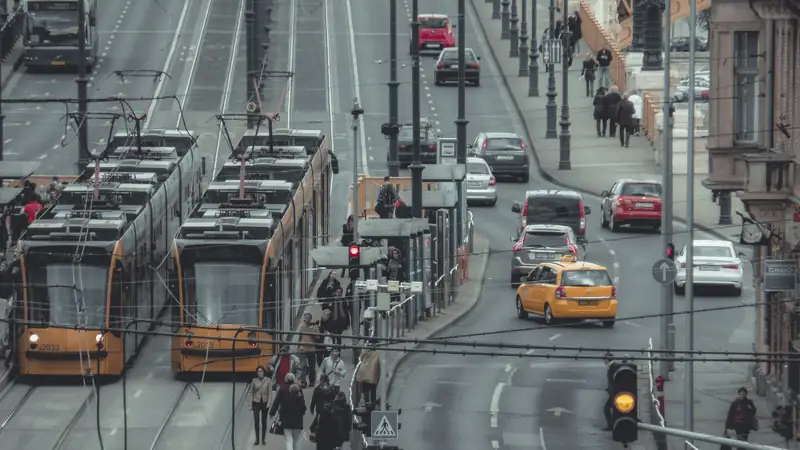
- Passers-by — shoppers who passed the screen
- Impressions — shoppers who turned towards the screen
- Attention — shoppers who looked longer than a set threshold
- Average attention and watch time, in seconds
- Age group and gender — aggregated, per time slot
Every figure is available by hour and by day, for any date range, per screen and per store — on the RVC.DIGITAL dashboard and as a CSV export.
What it changed
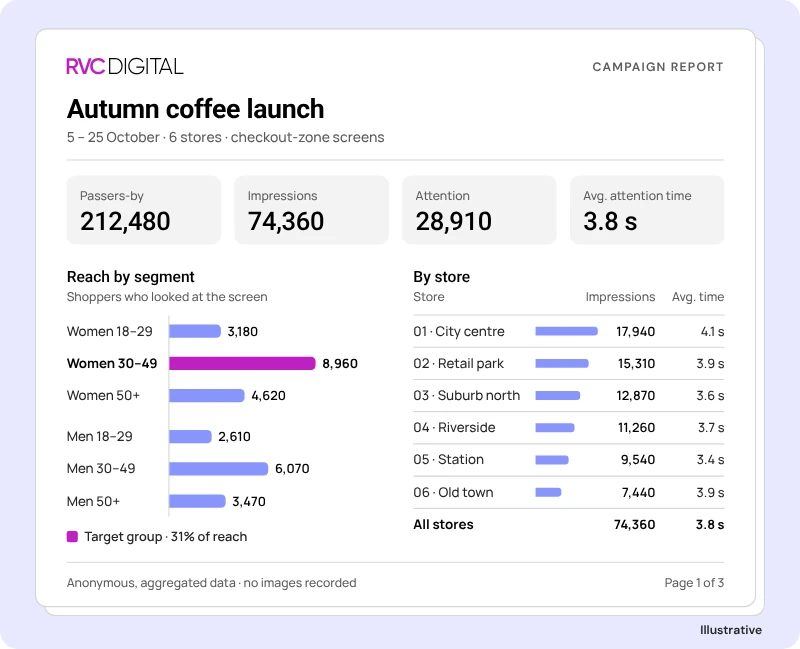
The retail media teams now report a measured audience to their advertisers. After a campaign the advertiser receives a report: how many shoppers the screens reached, how long they looked, and the age and gender mix of the audience — by store and by time slot. Screen time can be offered by audience and time of day, not only by the number of screens.
The report says who was in front of the screen and whether they looked. It does not claim a sales uplift: linking audience data to till data is the retailer's own analysis.
What comes next
The same anonymous signal can also steer content: a content mix that follows the audience of the current time slot, decided by the retailer's own CMS. That is an option on top of measurement, not part of the deployments described here.
Privacy
Shoppers are counted, never identified. Processing happens on the device, no image leaves it, nothing is recorded, and there is no face recognition. An independent data protection impact assessment (November 2024) found the system outside the scope of the GDPR. Privacy & compliance →